

Rasa · Kitchen
Six tastes in your kitchen
Curious about a traditional term? Ask Maha.
A squeeze of lime. The warmth of chile or ginger. The gentle sweetness of corn, rice or a ripe date. In my kitchen, and in yours, familiar flavors open a path into rasa, Ayurveda’s traditional language of taste, rooted in India and explored through everyday life.
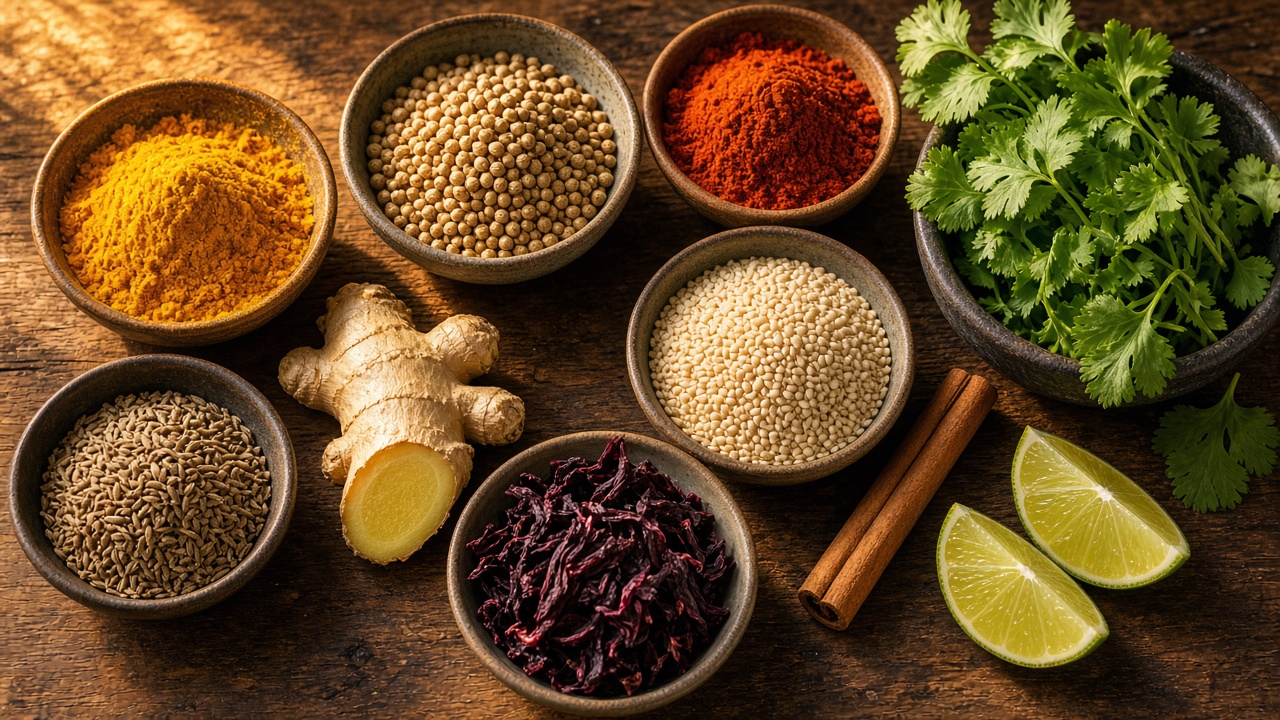 Rasa · spices
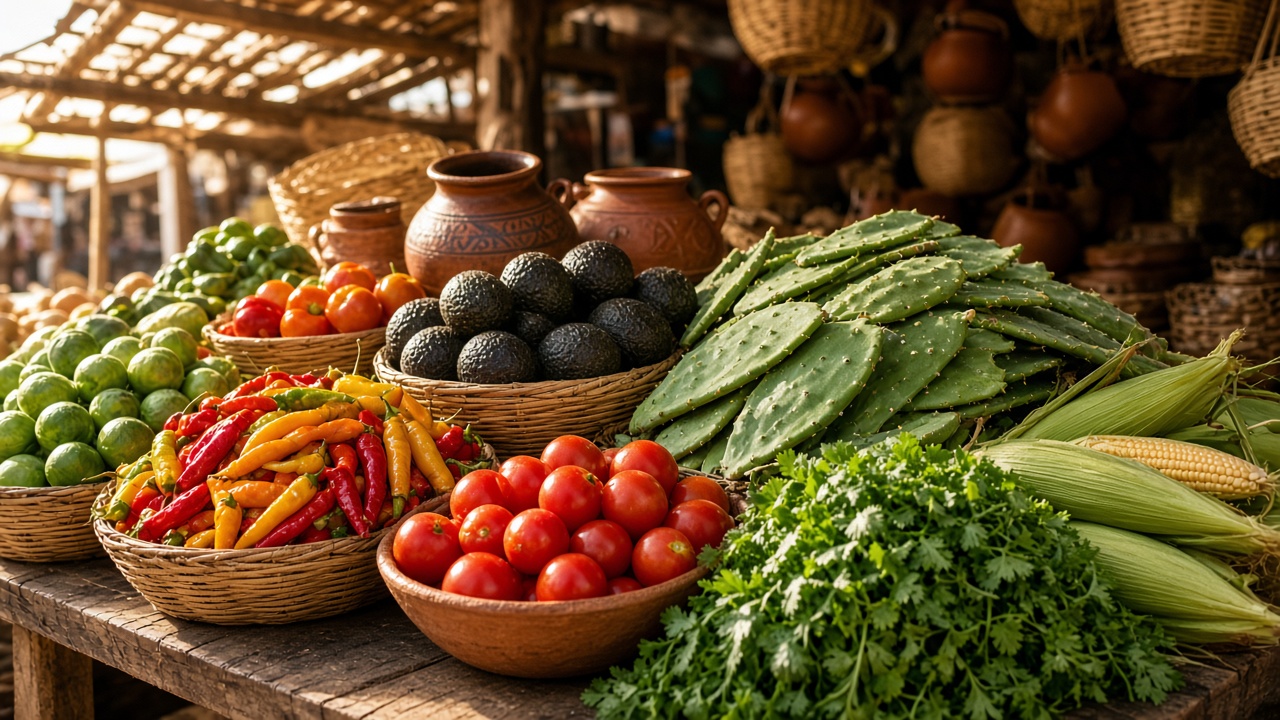 Market
Begin with what you can notice
Classical Ayurveda describes six tastes: sweet, sour, salty, pungent, bitter and astringent. Its teachings originate in India. I love exploring that vocabulary through Mexico’s food traditions, but every kitchen holds all six tastes, whether you cook dal, caldo, pasta or a simple soup.
Rasa means taste in this context. Traditional study also considers virya (heating or cooling potency) and vipaka (post-digestive effect within the classical framework). These are distinct ideas, not medical measurements or promises about how an individual will respond.
Sweet · the quiet flavor of corn
The gentle sweetness of corn, rice or ripe fruit offers a familiar starting point. In Ayurveda, “sweet” is a traditional taste category, not simply a label for added sugar. Ingredients can express more than one quality, depending on preparation.
Sour and salty · lime, tomatillo, caldo
Lime and tomatillo show the brightness of sour taste. A little salt in a caldo brings other ingredients forward. These are observations about flavor, not advice to increase salt intake or use a food to change a medical condition. The kitchen remains a place of attention, not prescription.
Pungent · chile and ginger
Chile, ginger and pepper have a warmth or sharpness that changes with the ingredient and its preparation. In classical Ayurveda, pungency is one of the six tastes. It offers language for sensory observation, not a treatment indication based on dosha. Pungent (katu) names a taste, not a temperature: a hot caldo can be mild, and a cold salsa can be very pungent.
Bitter and astringent · two different sensations
Unsweetened cacao and some leafy greens offer examples of bitterness, with their own histories in many food cultures, from Mexico to India. Astringency is different: it is the drying or puckering feeling found in some beans, teas and fruits. Neither taste promises a particular effect on the body. Ingredients vary by variety, ripeness and preparation.
The table belongs to everyone at it
A shared meal carries more than flavor: the hands that prepared it, the stories behind its ingredients, and the care of making room for others. Learning to notice taste can deepen appreciation without asking everyone at the table to eat alike. The classical vocabulary is a lens for curiosity, not a way to judge another person's plate.
A moment of reflection
At your next familiar meal, notice its colors, aroma, temperature and tastes before changing anything. Think about where the ingredients come from and who taught you to prepare them. You can keep the observation to yourself. The purpose is understanding, not a food score or a prescribed menu.
You do not need to gather all six tastes in one meal. From taste, the path continues to Ahara Vidhi, traditional reflections on how we eat, and Dinacharya, the rhythm of an ordinary day.
This is general education about classical Ayurveda and food culture, not a personalized diet, medical nutrition therapy, diagnosis or treatment. For a medical condition or dietary restriction, seek advice from an appropriately licensed professional.
Continue with Ahara Vidhi or explore educational services. Any individualized service requires confirmation of age, current physical location, eligibility, price and terms before manual payment instructions.