
Featured
Explore Ayurvedic Qualities
Thirty everyday-life questions introduce the traditional language of Vata, Pitta and Kapha. Your selections are for reflection, not a constitution finding.
Guides
Start with a question about food, daily rhythm, or a classical concept. These guides connect clear explanations with familiar examples, giving you room to learn, reflect, and return.
Thirty everyday-life questions introduce the traditional language of Vata, Pitta and Kapha. Your selections are for reflection, not a constitution finding.
From the food on your plate to the rhythm of your day, discover timeless Ayurvedic wisdom and how it connects with everyday life.
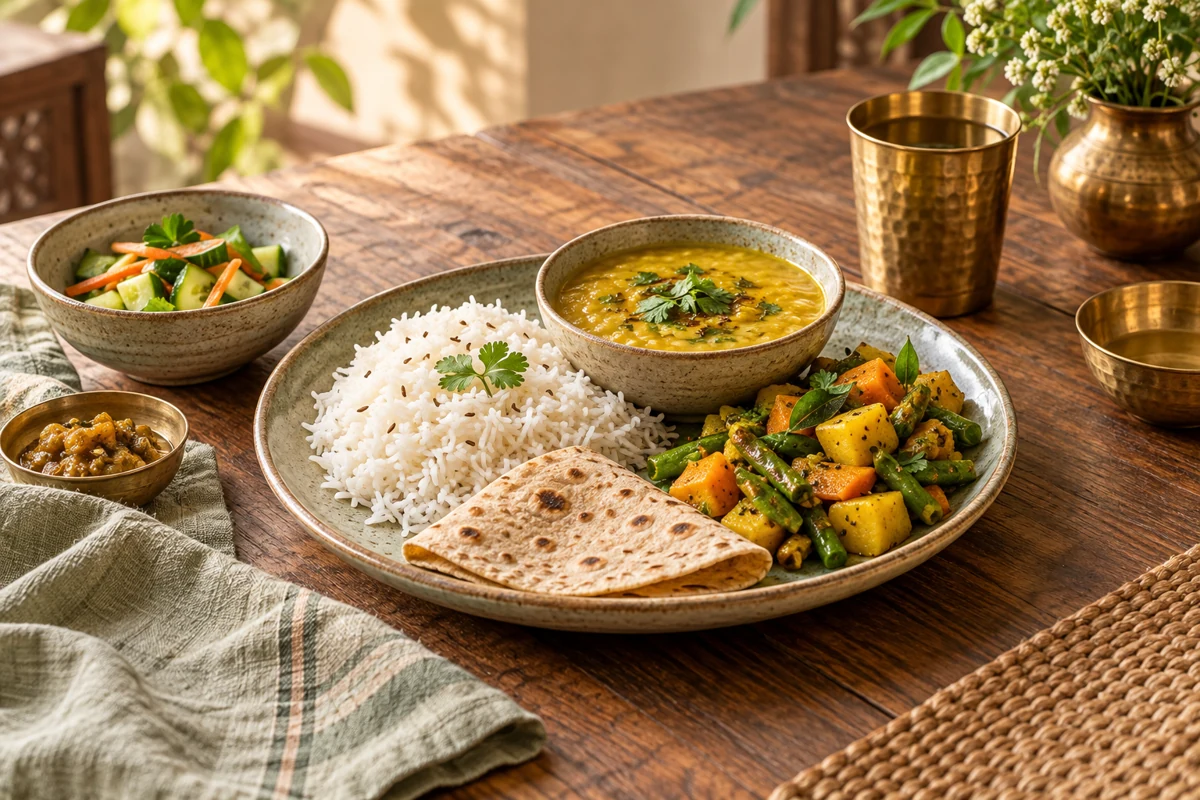
Āhāra Vidhi
Explore classical guidance on food, quantity, setting and attention. Understand the principles before turning them into habits.
Read Guide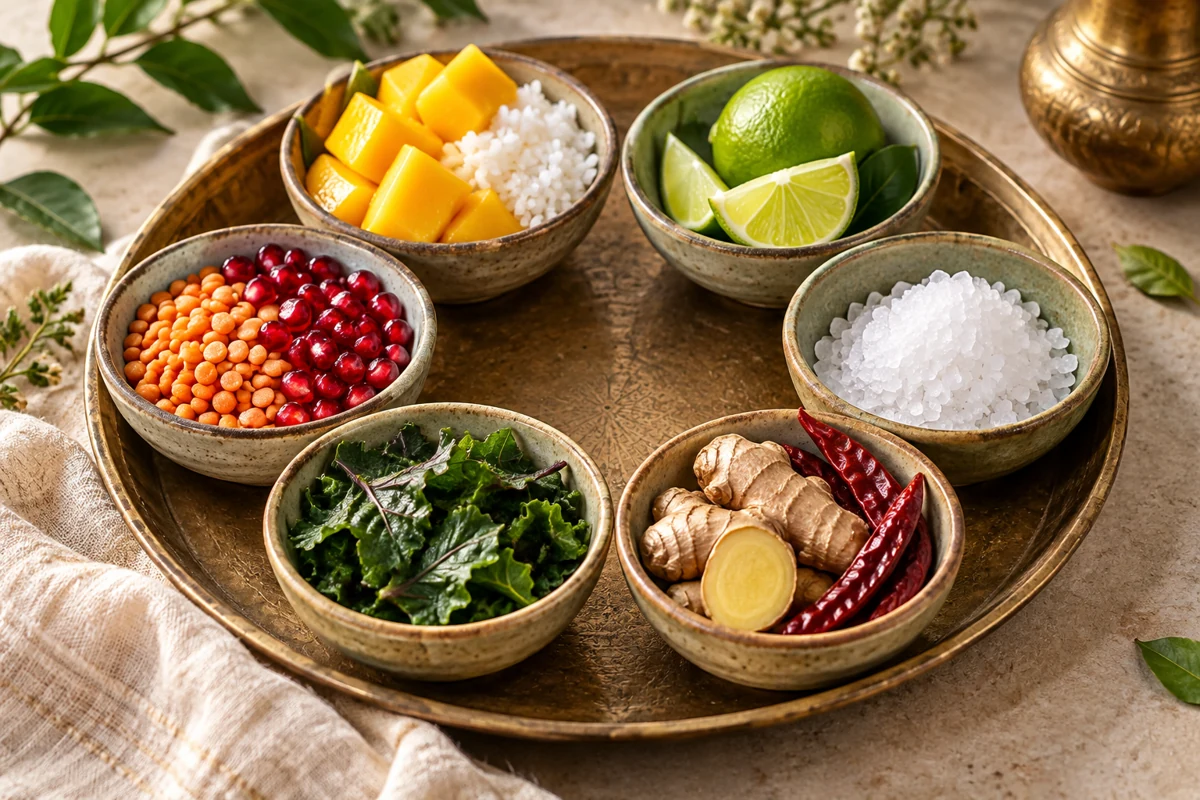
Rasa
Meet the six traditional tastes, then discover how familiar Mexican ingredients help make this classical language tangible.
Read Guide
Agni
Agni is more than a metaphor for fire. Explore this classical idea and the place of meals, attention and rhythm in everyday observation.
Read Guide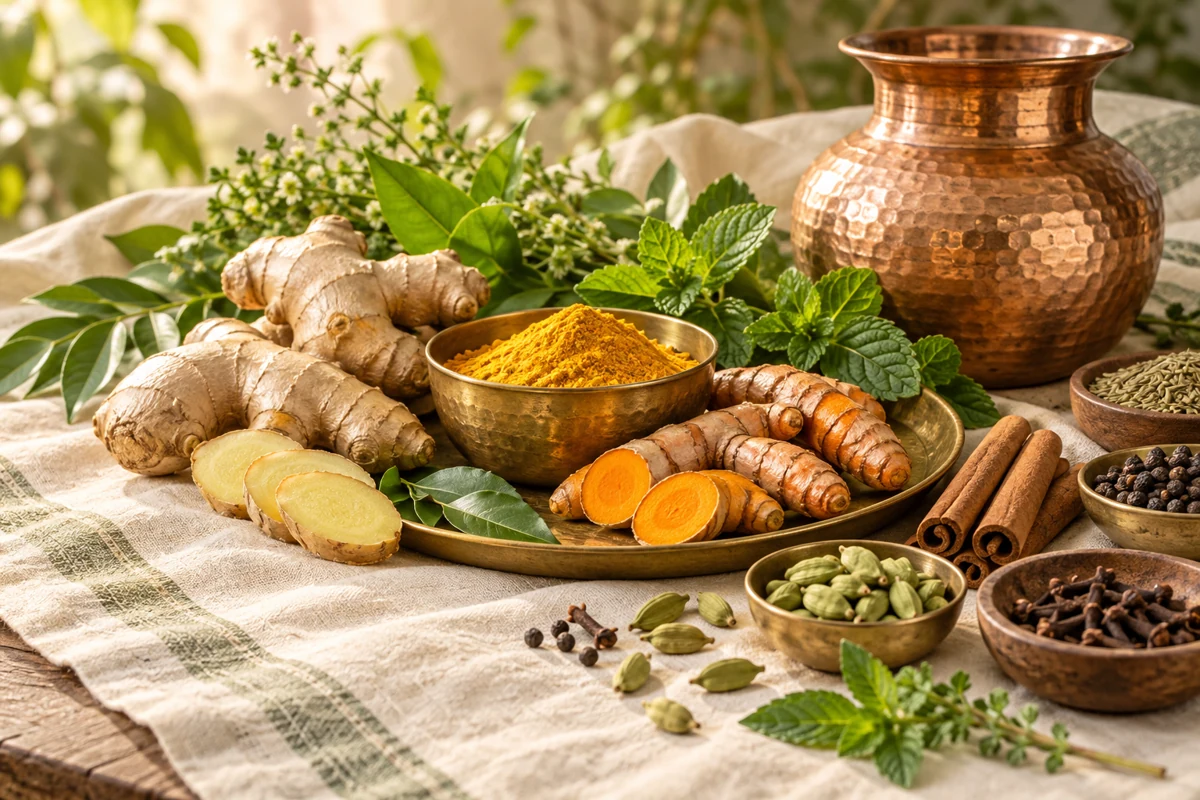
Āma
Learn how classical Ayurveda describes Ama and how to approach traditional observations without turning them into a diagnosis.
Read Guide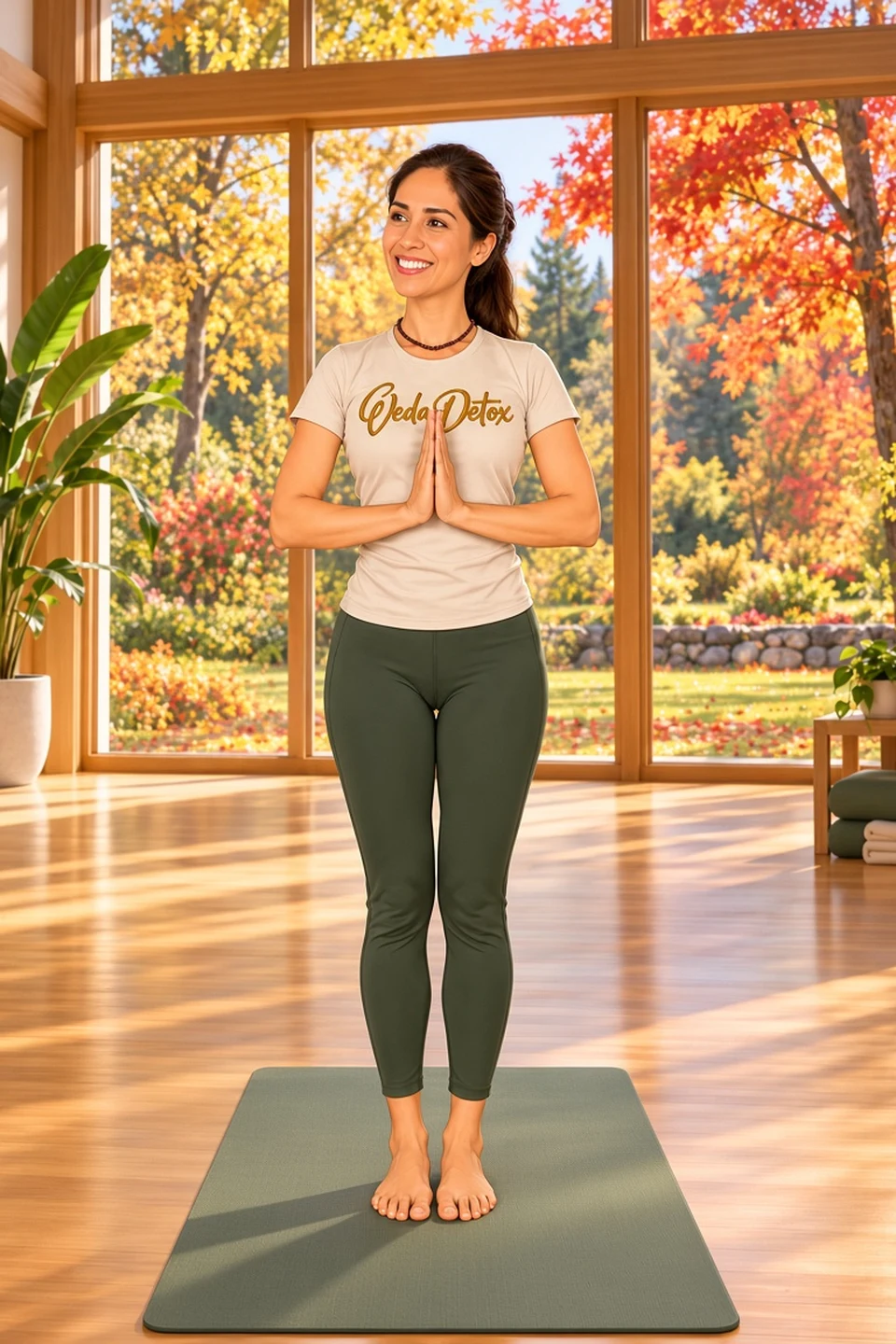
Dinacharya
Explore the traditional rhythm of morning care, meals, movement and rest, and consider how it meets your own day and season.
Read Guide
21-Day Journey
A structured educational journey that makes room for learning, daily routines and reflection. It is not a medical cleanse or treatment.
Read GuideMeet the three doshas as a classical way of describing qualities, then follow each one into its own guide.
Read Guide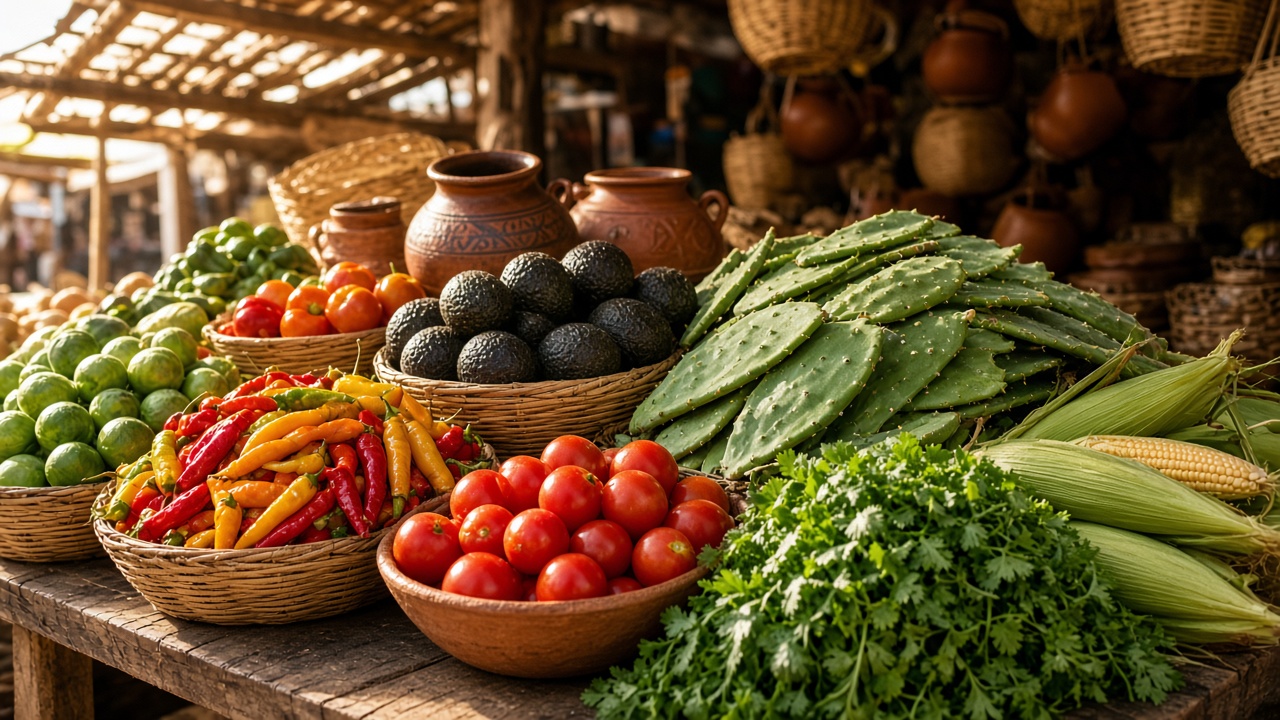
A warm Mexican kitchen offers familiar ingredients through which to explore Ayurvedic ideas from India, without erasing either tradition.
Read GuideHow these ideas become part of a real day.
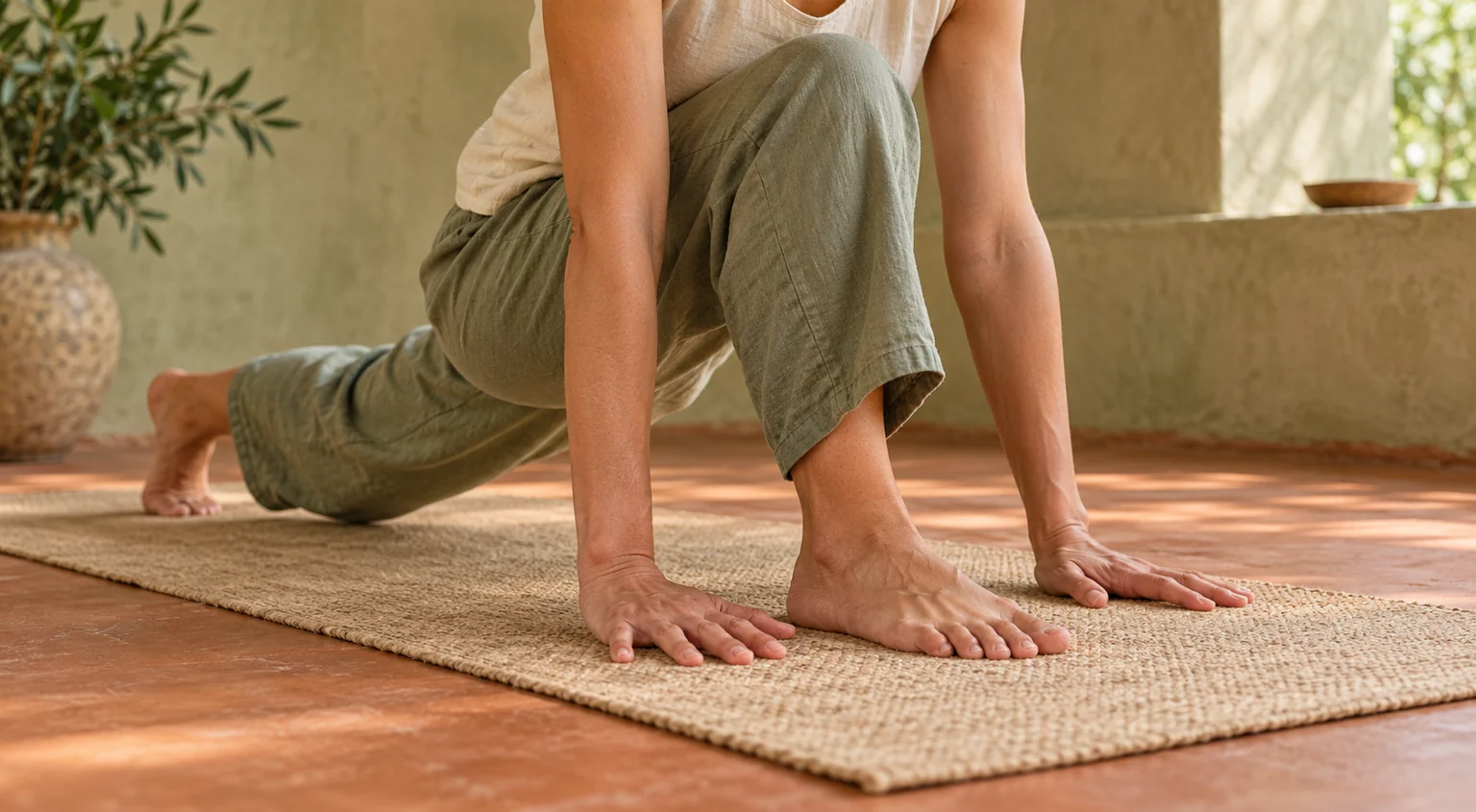
Explore the traditional rhythm of morning care, meals, movement and rest, and consider how it meets your own day and season.
Read GuideInteractive tools for reflection. None of them is an assessment.
Reflect on how things feel now, which is different from constitution.
OpenA short set of questions about your day, for reflection only.
OpenTraditional tongue vocabulary, explored area by area with keyboard or touch.
OpenTraditional tongue vocabulary, linked to Agni and Ama. It is educational and cannot establish disease.
Read GuidePrefer a map first? Start with the tongue education page or Ayurveda literacy.
Explore Ayurveda
Ayurveda invites you to understand yourself through the relationships between your body, mind, daily habits, and the world around you.
At Veda Detox, we bring this knowledge into everyday life—through nourishing food, mindful movement, restorative routines, and greater awareness of your own needs.
Nature around you. Nature within you.
In Ayurvedic philosophy, five elements describe qualities found throughout nature and human experience.





Together, they offer a language for understanding our relationship with the natural world.
Three patterns. Many individual expressions.
Ayurveda groups elemental qualities into three doshas:


Everyone expresses all three. Exploring them can encourage self-reflection about your tendencies and changing needs.

Nourishment begins in your kitchen.
Ayurvedic food traditions consider preparation, flavor, season, and individual experience.
Explore approachable recipes, familiar ingredients, and the pleasure of cooking with care.

Small practices. Room to breathe.
Dinacharya—the Ayurvedic tradition of daily routine—invites consistency into ordinary moments.
A gentle morning ritual. Time for movement. An unhurried meal. A quieter evening.
Pick one idea that fits your day and build from there.
Two small practices from my posts.

दम
The mind wanders. That is natural. Training it means noticing with patience, then gently coming back.
Try this: pause and take three slow breaths. Name the feeling gently: “This is worry.” Then bring your attention back to your breath.
Is this thought true, helpful or necessary right now?
Inspired by the Dhammapada, verse 35
अभ्यास
You don’t need the perfect routine. You just need to keep coming back. Consistency over intensity.
Try this: one nourishing meal, five minutes of yoga, a few deep breaths or a short walk. Pick one.
What’s one small thing I can do today?
Let your routines respond to the world around you.

Rutucharya explores how daily life can adapt to seasonal change.
Notice the weather, available foods, daylight, and your own experience. Let these observations inform how you cook, move, rest, and organize your day.
Awareness becomes a practice.
At Veda Detox, “knowledge that purifies” expresses our belief that understanding can bring clarity to the way we live.
As you learn to recognize your patterns, you can make space for habits that nourish you—and reconsider those that no longer serve you.
The thesis
Life has its own seasons. Ayurveda offers a time-honored language for noticing how food, rest, movement, surroundings and daily rhythms meet.
At Veda Detox, classical learning meets the warmth of lived Mexican traditions. Laura brings the depth of her Ayurveda education, while Maha offers another way to explore. The next steps belong to your own life.
Begin with an idea that feels familiar. Follow it toward deeper understanding, at your own pace.

Learning in context
Classical Ayurveda invites us to consider individual differences, food, changing seasons and daily rhythms together. Its teachings are rooted in India; their relevance is explored through the circumstances of everyday life.
From Laura
Dama, the gentle mastery of the mind. The Dhammapada compares the mind to a bird that moves wherever it wants. This is not a criticism. It is a reminder that wandering is natural.
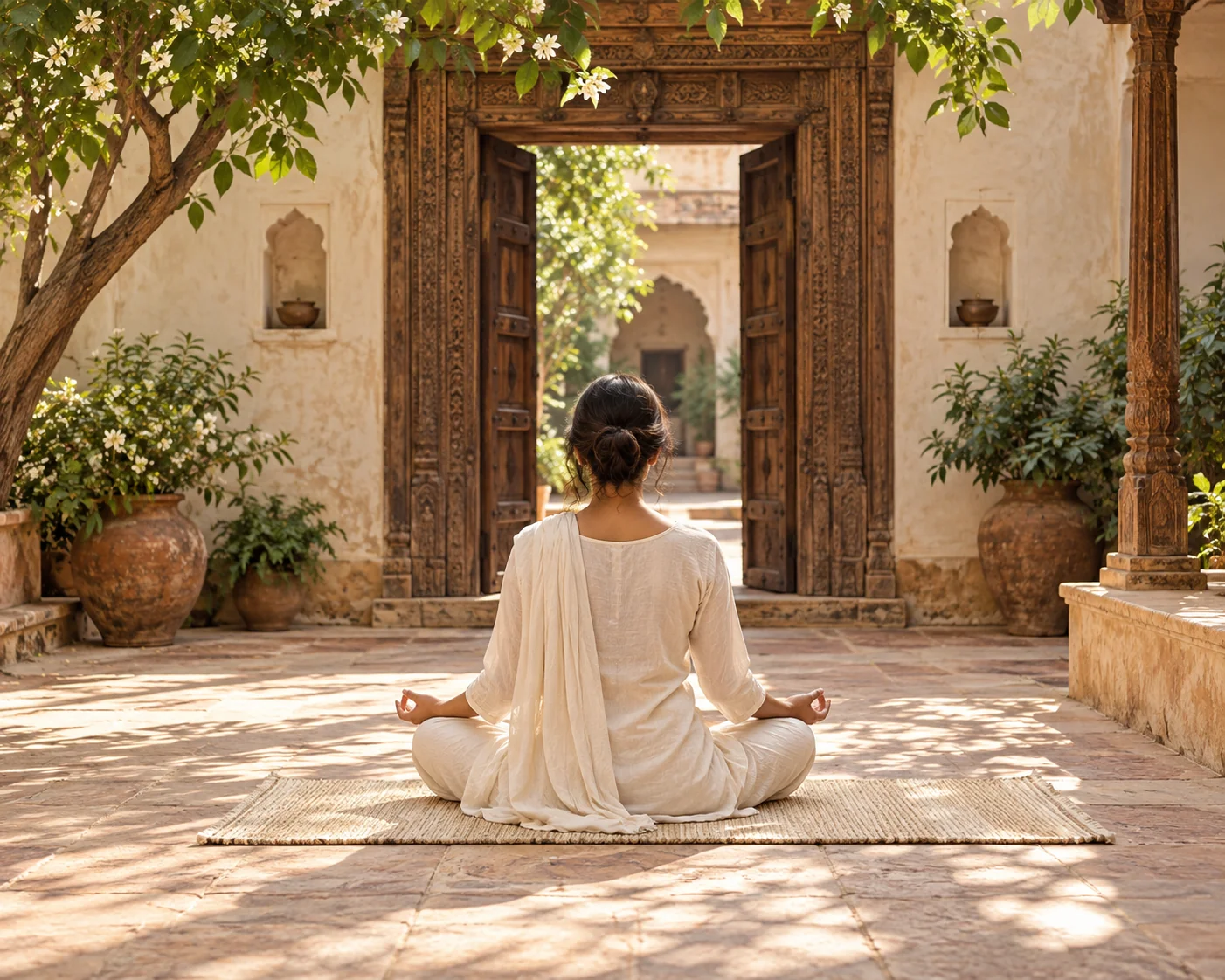
Training the mind does not mean stopping every thought or forcing yourself to feel calm. It means learning to notice your thoughts with patience and awareness. When your attention wanders, gently return to your breath. Every return is part of the practice.
“A peaceful mind is not one that never wanders. It is one that has learned how to return.” —Inspired by the Dhammapada, Verse 35
Prakriti and Vikriti describe foundational ideas about constitution and changing patterns in traditional Ayurveda. They are lenses for education, not medical assessments.
Dinacharya considers the rhythms of waking, personal care, movement, meals and rest. Its value here is in understanding the tradition and reflecting on routines that suit everyday responsibilities.
Ahara invites reflection on what, when and how we eat. Corn, beans, chile and family tables remain part of the lived Mexican context—not ingredients to erase.
Jihwa pariksha and descriptions of everyday patterns introduce traditional vocabulary for discussion. Tongue appearance cannot establish disease, organ function, or prevent a medical crisis.
Explore the tongue map →Understanding grows through curiosity, repetition and experience. Begin with a question; return to it as your daily life changes.
Classical method · daily practice
Explore food, season, rest and routine as classical topics of learning, while keeping medical care in its own essential place.
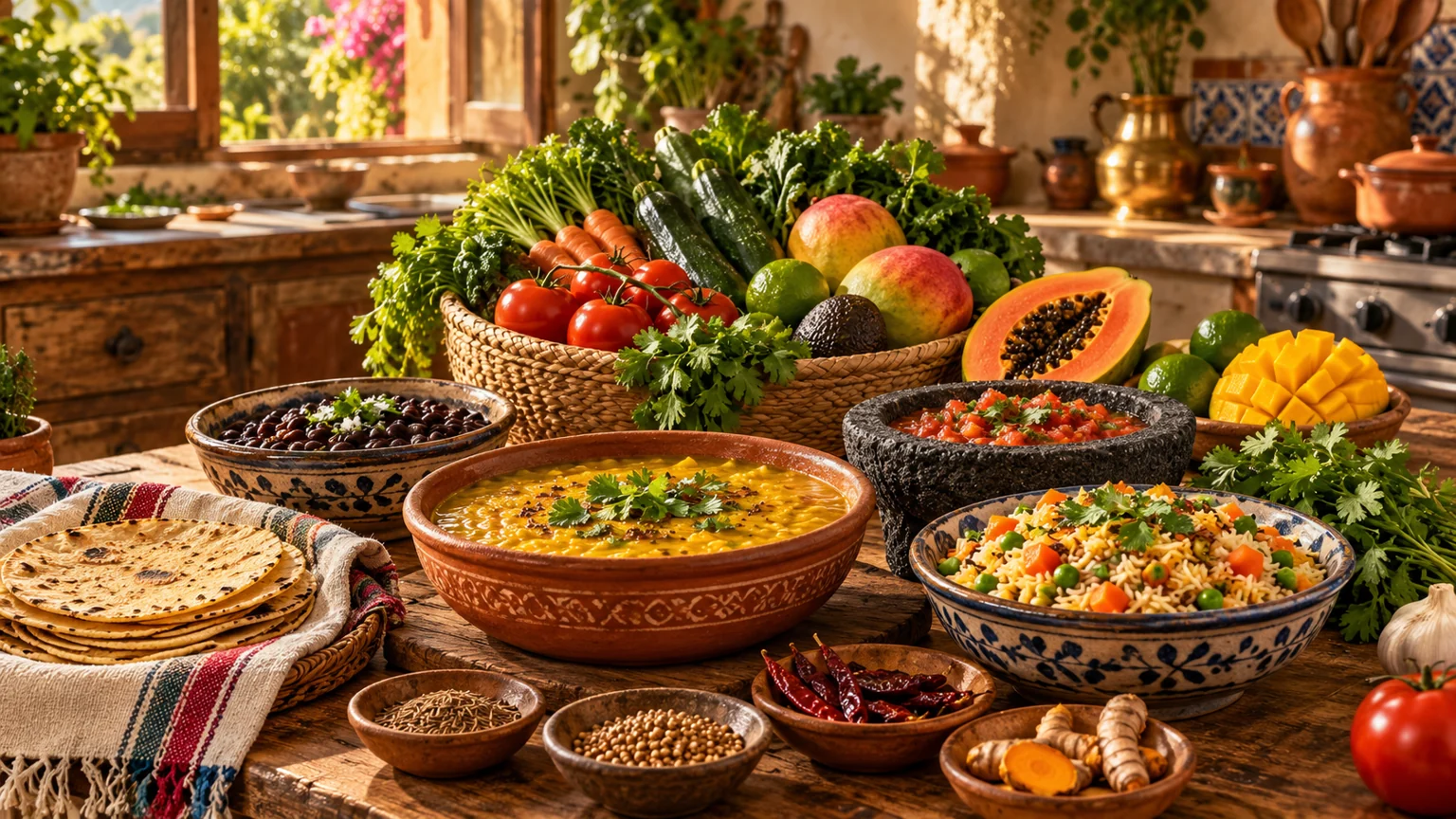
Ahara includes traditional reflections on ingredients, preparation, season and the experience of eating. Mexican kitchen traditions offer familiar places to begin.
Maha can help explain classical vocabulary and suggest further reading. Laura, founder of Veda Detox, teaches within an educational scope. Neither replaces medical care.
Want to learn with Laura? See Work With Laura.
The place where learning lives
Ayurveda's classical knowledge comes from India. At Veda Detox, it meets the warmth of Mexican kitchens, gardens, family life, and everyday practice. You are invited to find what resonates in your own surroundings.
Lived table
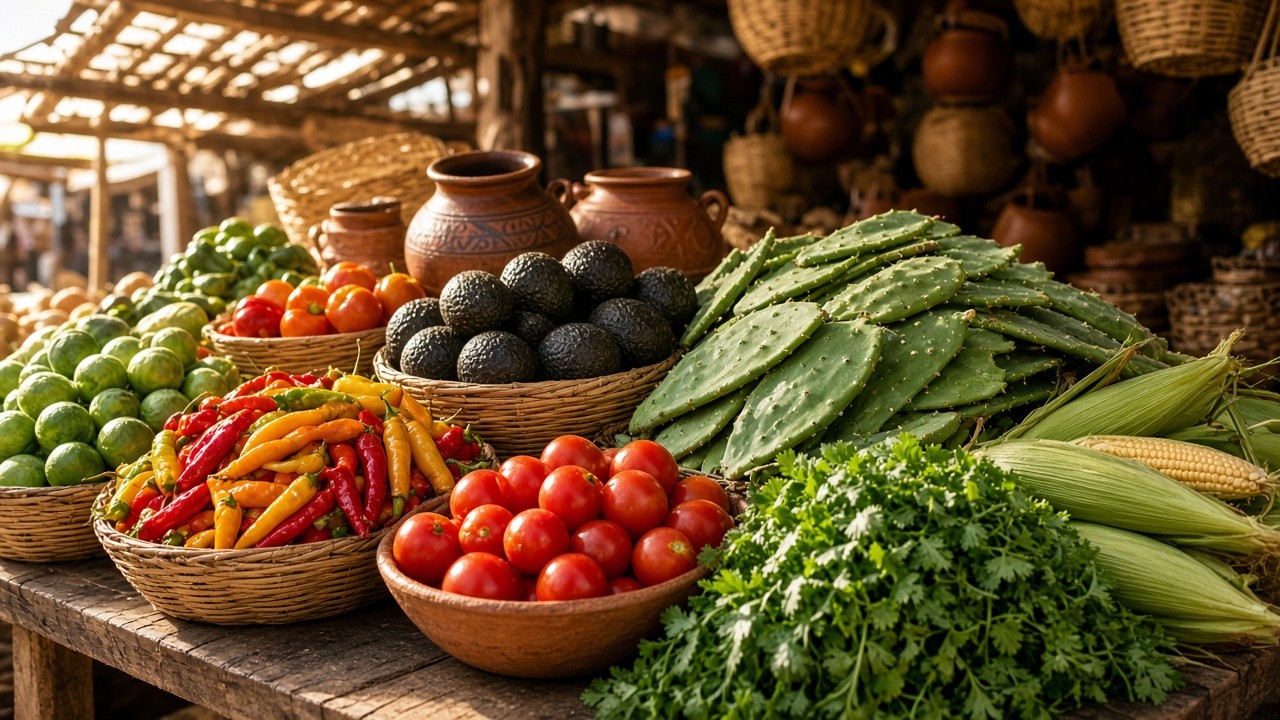
Corn, chile, beans, herbs and spices belong to real kitchens and real families. A comal, a garden and a shared table can become places to explore Ayurvedic ideas with curiosity and respect.
 India · classical roots
Laura brings sixteen years of professional Ayurveda experience and a life shaped by study and practice in India and Mexico.
The kitchen, movement, gardens and changing seasons belong to one connected learning experience. You are welcome to explore at your own pace.
Keep reading the guides, ask Maha about a traditional concept, or book a free discovery call and we will talk.
Foundations
Ayurveda begins with learning to notice: qualities, patterns, appetite, energy, rest, season, and change. These classical ideas are rooted in India. Veda Detox helps you understand them clearly, encounter them through a warm Mexican and Latin American perspective, and discover what thoughtful everyday practice can look like where your own life has planted you.
Begin with the foundations
You do not need to master Ayurveda all at once. Begin with a few ideas. See how they relate to one another. Then carry that understanding into the kitchen, the rhythm of a day, the changing season, movement, rest, and the way you care for yourself.
 ĀkāśaSpace
 VāyuAir
 AgniFire
 JalaWater
 PṛthvīEarth
Agni is the traditional Ayurvedic concept of digestive and transformative fire. Laura teaches how classical Ayurveda describes strong, variable, sharp, or slow digestive qualities and how those concepts relate to daily routines and food traditions.
Ama is a traditional Ayurvedic concept often described as incomplete or improperly processed residue. Veda Detox teaches ama as a classical Ayurvedic framework, not as a claim that literal toxins have been identified or removed.
Daily rhythm: wake, tongue care, meals, movement, and evening wind-down. Small, thoughtful routines may be easier to explore than an ideal schedule that leaves no room for ordinary life.
Food has an important place in traditional Ayurveda. Laura teaches classical ideas about timing, preparation, tastes, qualities, combinations, and mindful eating. Where location rules allow individualized food education, these ideas may be adapted to a participant’s preferences and traditional dosha framework; they are not medical nutrition therapy or a therapeutic diet.
In classical Ayurveda, Panchakarma refers to a tradition of supervised practices with preparation, procedures and aftercare. Veda Detox teaches its history and vocabulary; this website does not offer Panchakarma therapies. The separate 21-Day Journey is educational, not a Panchakarma program. Laura’s postgraduate Ayurveda and Panchakarma education informs this teaching.
Traditional Ayurveda. Experienced guidance. Practical learning.
Veda Detox brings the depth of traditional Ayurveda into everyday life through personalized education with Laura. Drawing on her B.A.M.S. training and sixteen years of client-facing Ayurvedic practice, Laura helps participants explore this rich body of knowledge and connect its principles with their routines, preferences, and wellbeing.
Her teaching includes constitution and dosha exploration, the qualities of Vata, Pitta, and Kapha, and classical concepts such as prakriti, vikriti, agni, ama, and gunas. These ideas provide a traditional framework for learning about food, daily rhythms, seasonal routines, and self-observation.
Through Veda Detox, Laura can guide you in:
Individualized offerings reflect the requirements that apply in your current location.
Laura’s professional history includes sixteen years of client-facing Ayurvedic practice. Her B.A.M.S. training and experience inform the depth and practical perspective she brings to Veda Detox as an Ayurveda & Wellness Educator.
Scope of service: Veda Detox offers Ayurveda and wellness education that can complement healthcare. Constitution explorations and traditional observations are educational tools, not medical diagnoses or explanations of what caused a disease or symptom. Services do not include medical nutrition therapy, prescribing or changing medication, or claims to treat, cure, prevent, reverse, or relieve disease or symptoms. Laura’s Ayurvedic qualifications are distinct from U.S. medical licensure.